Skip to content

Explore the Collection

Burrs

Effortlessly add fine details, textures, and artistic embellishments with your rotary tool.

Shaping Wheels

Quickly remove material and shape flowing forms with ease using your angle grinder.

Hand Rasps

Multi-directional control for shaping, refining, and adding texture by hand.

Contour Wheels

Craft concave hollows, rounded edges, and sculpted recesses with your choice of power tool.

Burr Kits

Ready-made sets of carving essentials for adding detail, refining form, and exploring new creative styles.

Grinder Accessories

Mount your wheels with confidence with adapters and accessories designed to enhance control and expand tool compatibility.

Gear

Show your pride and stay protected with branded apparel and dust masks designed for comfort, confidence, and safety.

Furniture Making Tools

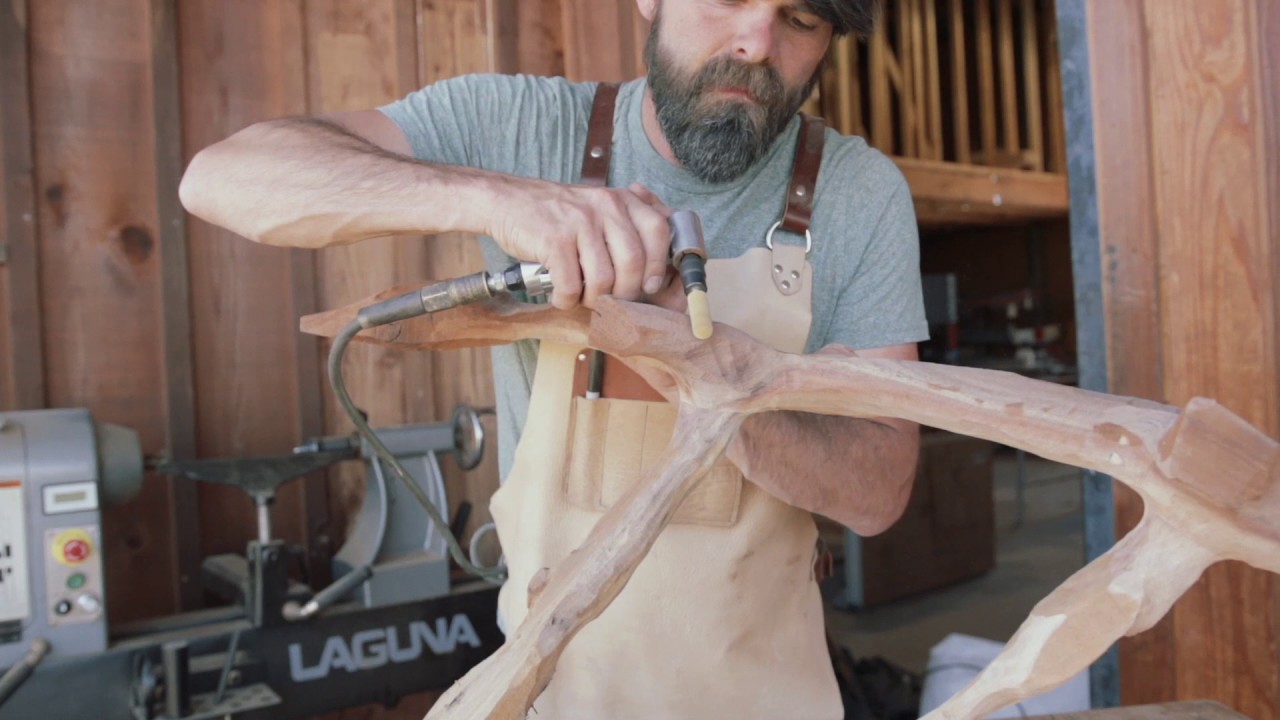
Power carving allows furniture makers to go beyond flat surfaces and sharp edges — adding flowing curves, sculpted transitions, and organic textures that bring furniture to life. Whether you’re building tables, chairs, cabinets, headboards, or custom built-ins, power carving gives you the ability to shape wood intuitively and create truly one-of-a-kind pieces.

  • New

Loading image:
@jorybrigham_design

From Flat Boards to Sculpted Furniture

Traditional furniture making relies on straight cuts, joinery, and machining — but power carving is what adds flow, comfort, and visual interest.

After your parts are milled and assembled, power carving becomes the
natural next step for:

  • Shaping armrests, chair backs, and seat contours
  • Softening hard edges and transitions
  • Adding decorative texture and surface detail
  • Sculpting organic curves and profiles
  • Blending joints and seams seamlessly
  • Creating ergonomic forms that feel good to touch

Power carving doesn’t replace traditional tools — it enhances them. Together, they allow you to combine structural precision with artistic shaping.

Loading image:
@jorybrigham_design

Why Furniture Makers Use Power Carving

Furniture projects start as flat stock — but people experience them in three dimensions. Power carving introduces comfort, flow, and personality.

Common applications include:

  • Sculpted chair seats and backs
  • Organic table edges and live-edge transitions
  • Carved drawer pulls and handles
  • Textured cabinet doors and panels
  • Decorative accents on headboards and bed frames
  • Shaping legs, arms, and structural elements
  • Blending laminated curves and bent forms

Whether you’re adding light refinement or deep sculptural shaping, power carving helps furniture feel more human, more tactile, and more custom.

Loading image:
@garawood

Where Power Carving Fits in Furniture Making

Power carving fits naturally into the furniture workflow after your parts are milled, cut, and assembled — when you move from fabrication to refinement.

At this stage, power carving gives you direct control over:

  • Grain direction
  • Depth of cut
  • Ergonomic shaping
  • Blending and smoothing
  • Complex curves and transitions

This makes it ideal for:

  • Sculpting assembled furniture parts
  • Refining armrests, seats, and backrests
  • Softening edges and contact surfaces
  • Blending joints and laminated curves
  • Fine-tuning comfort and feel

Power carving tools act like rotary chisels, allowing furniture makers to shape wood intuitively — bridging traditional machinery with true hand-guided sculptural control.

Loading image:
@morningworks

The Right Tools for Furniture Power Carving

Not all carving tools are suited for furniture work. The best tools offer control, durability, and predictable cutting across both soft and hardwoods.

When choosing power carving tools for furniture making, look for:

  • Smooth cutting action without grabbing
  • Clean performance on hardwoods
  • Profiles that work on flat and curved surfaces
  • Long tool life without clogging
  • Compatibility with rotary tools, die grinders, or flex shafts
  • Controlled stock removal for blending and shaping

Quick FAQ

Can power carving be used on hardwood furniture?

Yes. Power carving works extremely well on hardwoods like maple, walnut, oak, cherry, and mahogany.

Is power carving better than sanding?

For shaping and blending — absolutely. Power carving removes material intentionally, while sanding only smooths what’s already there.

Is this for decorative work only?

Not at all. Power carving is commonly used for ergonomic shaping, comfort, and structural blending.

Does power carving replace hand tools?

No — it complements them. Power carving speeds up shaping so you can focus on refinement and finish.

Back to top